

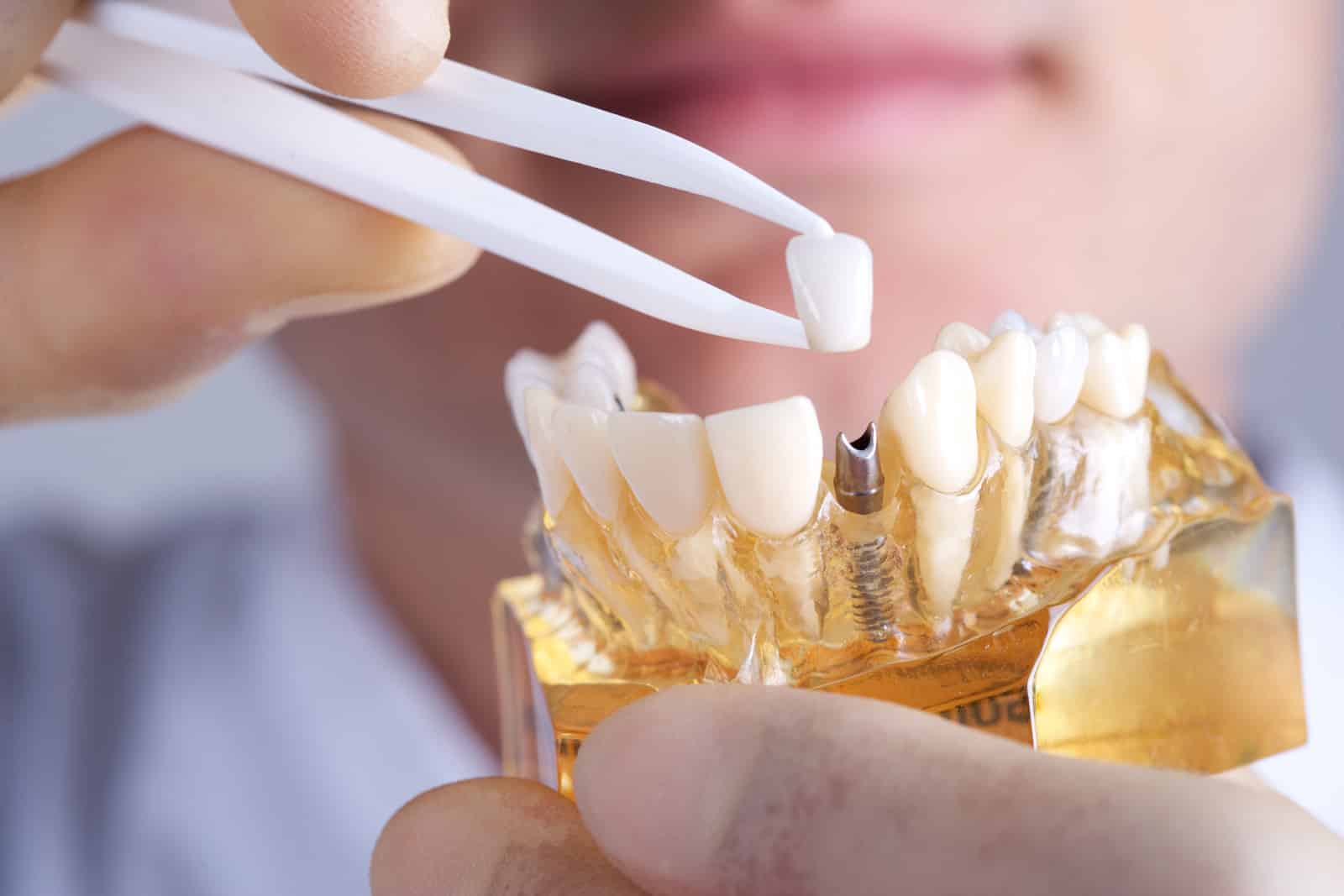
A dental implant is a small post, usually made of titanium, that a dentist places in the jawbone to replace a missing tooth’s root. Over several months, the bone around the post may fuse with it; this process is called osseointegration. Once the post is stable, a connector attaches it to a crown, bridge, or denture. Here are some options for dental implants:
Single Tooth
A single tooth implant replaces one missing tooth; dentists place one post, one abutment, and one crown. Dentists often recommend this option when a tooth has been lost to injury or decay. The crown is custom-made to match the shape and shade of the surrounding teeth. Unlike a traditional bridge, a single implant does not require filing down neighboring healthy teeth for support.
Treatment usually happens in stages. First, the dentist places the post. You then wait a few months while the bone heals around it. After that, the abutment and crown are attached. If the jawbone has thinned in that area, you may need a bone graft before placement; this adds time to the overall process.
Fixed Bridge
When two or more teeth in a row are missing, an implant-supported fixed bridge is one approach. Instead of placing a post for every missing tooth, the dentist places dental implants at each end of the gap. A row of connected crowns spans the space between them. In many cases, three or four missing teeth are replaced with just two implants. You do not remove a fixed bridge. Brush it like natural teeth, and use floss threaders or a water flosser to clean underneath.
Full-Arch Implants
Full-arch implants replace an entire upper or lower set of teeth. Typically, four to six implants are placed at specific angles in the jaw, and a full row of prosthetic teeth is fixed to those posts. This method is sometimes called “All-on-4” or “All-on-6,” based on the number of implants used.
This option is designed for people who have lost most or all of their teeth or whose remaining teeth are failing. In some cases, a temporary set of teeth is attached on the day of surgery. The permanent prosthesis follows after healing, and this generally takes several months. Daily care includes brushing, cleaning beneath the prosthesis with a water flosser, and attending regular checkups so your provider can examine the implants and gums.
Implant-Supported Dentures
Implant-supported dentures are a removable alternative to a fixed full arch. Two to four implants are placed in the jaw, and the denture snaps onto attachments on top of the posts. You take it out at night and for cleaning. Traditional dentures rest on the gums and rely on suction or adhesive. Overdentures attach to fixed anchor points instead, which may reduce slipping while you eat or speak. The attachments wear over time and need periodic replacement.
Learn More About Dental Implants
Each implant option comes with its own steps, timeline, and maintenance needs. The right fit depends on factors only an in-person exam and imaging can reveal. A consultation gives you time to ask about bone grafting and healing periods. Contact a dentist today to schedule your implant consultation.
