

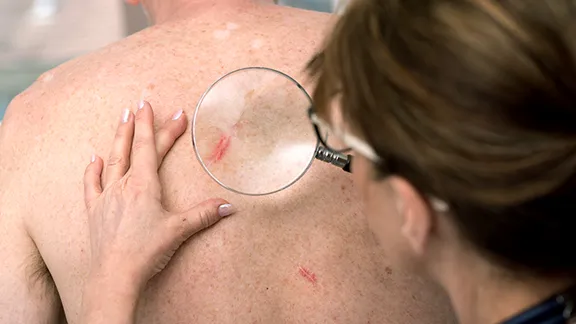
Skin cancer is the most common cancer in the United States. It involves abnormal skin cell growth, and it can spread when it is not treated early. Because sun exposure is a common cause and all skin types remain vulnerable, regular skin checks support ongoing monitoring, and suspicious areas may require medical evaluation.
Assessing Risk of Skin Cancer
Some factors raise skin cancer risk. Sunburns, excessive sun exposure, fair skin, moles, and a weak immune system are listed risk factors, and exposure to radiation or toxins is also associated with a higher risk. Although all skin types are vulnerable and anyone can develop it, people who live in sunny climates or have a family or personal history face increased risk, and tanning bed use is linked to sun damage that can lead to actinic keratosis.
Identifying Signs of Skin Cancer
Basal cell carcinoma is the most common type. It often develops on the face or neck; it may appear as a flesh-colored scar or pearly bump. Although actinic keratosis results from sun damage, it is not the same; the condition can become cancerous if it is not treated. Medical evaluation may be needed. Other signs include a scabbed or bleeding sore and a waxy pink lesion.
Squamous cell carcinoma is the second most common type. It often appears as a crusted lesion or firm red nodule; it commonly develops on sun-exposed skin. Melanoma is the deadliest form. When melanoma develops, it may appear as a changing mole with dark specks; lesions may also appear black, red, pink, blue, purple, or white. If a mole changes in size or color or develops an irregular border, medical evaluation may be required, and bleeding lesions may also need examination.
Reviewing Treatment of Skin Cancer
Treatment begins after a biopsy detects skin cancer. Excisional surgery, freezing, Mohs surgery, topical chemotherapy, and photodynamic therapy are listed as treatment options; the treatment plan depends on the lesion location. Although treatment varies by cancer type and location, doctors select from several approaches, and biopsy results guide treatment decisions.
Biopsy results guide follow-up care. If testing detects it, doctors develop a treatment plan; that plan depends on the cancer location. When melanoma spreads, and additional treatment is needed, chemotherapy, radiation therapy, or systemic therapy may be used, and those findings guide later care.
Follow-up care also includes skin monitoring. Sunscreen, protective clothing, and avoidance of tanning beds are recommended, and routine skin checks are also advised. Although treatment depends on biopsy findings and lesion location, annual skin checks and at-home monitoring remain part of follow-up care, and changing lesions may require additional evaluation.
Find a Clinic
A suspicious area may require medical evaluation. Regular skin checks help identify areas that change over time, and doctors may recommend additional testing after examination. If a mole or lesion changes in color, size, or appearance and further review is needed, doctors assess the area during evaluation, and biopsy testing may also be performed. Find a clinic in your area to talk to a specialist, and learn more about diagnosis and treatment.
