

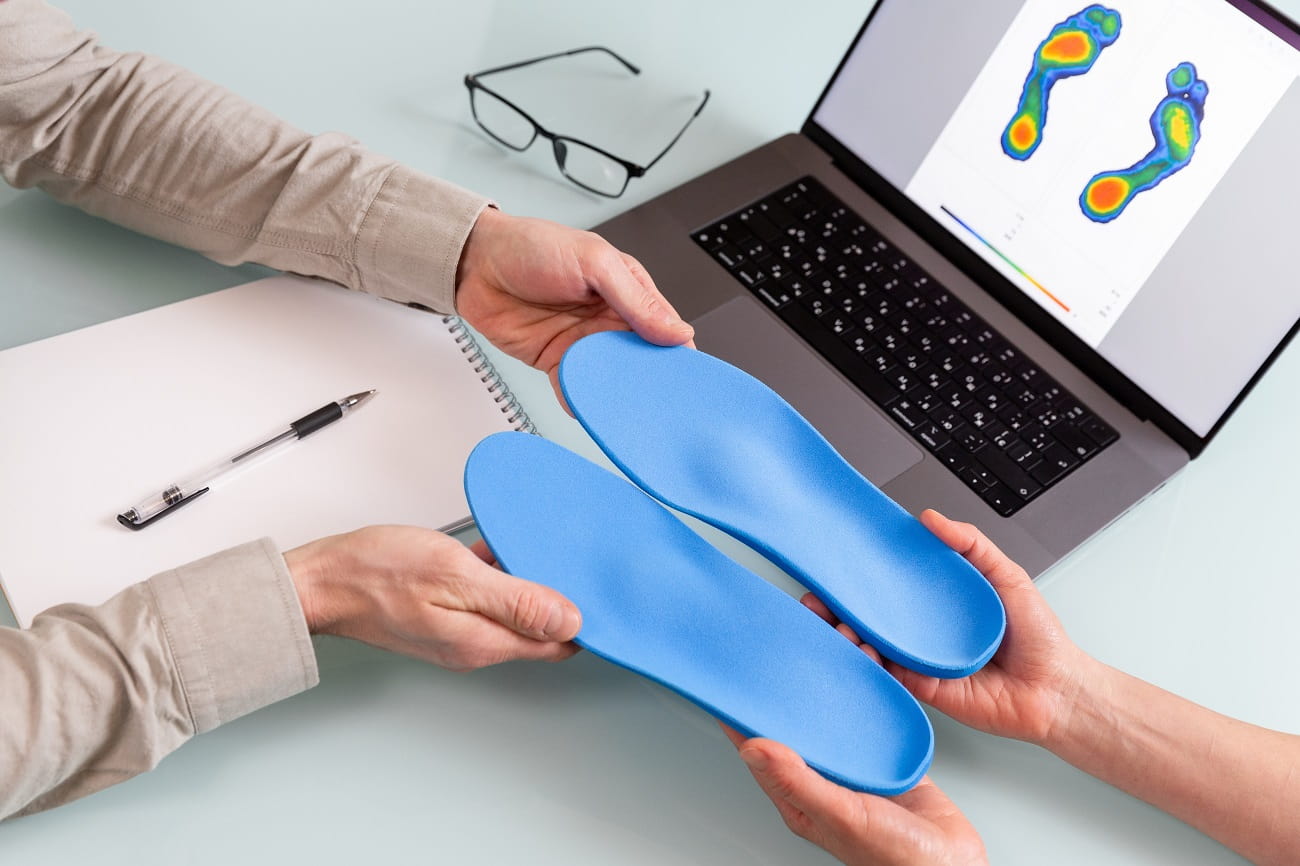
Custom orthotics play a key role in modern foot care by providing tailored support. They help improve comfort, alignment, and overall mobility. A podiatry specialist may recommend them as part of a broader treatment plan, and each pair is designed based on findings from a detailed foot assessment. Unlike over-the-counter inserts, custom orthotics are created to address individual concerns such as pain, instability, or uneven weight distribution. Here’s more information about custom orthotics and their benefits in podiatric care:
Understanding Custom Orthotic Inserts
Custom orthotics are shoe inserts designed to match the shape and structure of your feet. While off-the-shelf inserts follow a general pattern, a custom pair is based on measurements taken directly from your feet, allowing for a more precise fit. Before recommending a design, a podiatry expert evaluates how you stand, walk, and distribute your weight. Each pair reflects an individual foot structure, and the intended purpose guides the final design. Some inserts focus on support, while others redistribute pressure across the foot. Because every foot is different, the design remains specific to the individual who will use it.
Building Orthotics From Measurements
The customization process often begins with a detailed evaluation of your feet. A podiatrist may examine your foot shape, observe how you move, and note any patterns that stand out; this information forms the foundation for the design. When these details are recorded carefully, the final product reflects your structure more accurately.
Your podiatrist also creates a model of your feet, which may involve a physical mold, a foam impression, or a digital scan. This model captures the contours of your feet so the finished orthotics fit closely against them. Once the design is finalized, the orthotics are constructed from materials selected to suit your needs. Some materials are firm and rigid, while others are softer and more flexible; the specialist chooses the option that matches the intended purpose.
Reviewing Possible Fitting Situations
A podiatrist may recommend custom orthotics in a range of everyday situations, as they provide better support and cushioning than generic options. Possible reasons include:
- Foot structures that place uneven pressure on certain areas
- Activities or occupations that involve long periods of standing
- Footwear that does not provide adequate support
- Differences in how weight is distributed through the foot while walking
- Ongoing monitoring of a known foot-related condition
Custom devices are sometimes used to treat pain caused by conditions like arthritis and flat feet. Each situation is different, so the specialist tailors any recommendation to your specific needs. If you are unsure whether orthotics are appropriate for your circumstances, a professional assessment can provide clarity and give you the opportunity to ask direct questions.
Consult a Podiatry Expert
Custom orthotics are a practical option for treating foot pain, and a podiatrist may discuss them for supporting your feet if you have diabetes or plantar fasciitis. Understanding how a specialist measures, models, and constructs them prepares you for an informed conversation. When you bring the shoes you wear most often and note your questions ahead of time, you can make the most of your appointment. Contact a foot and ankle specialist today to learn more about these devices.
