

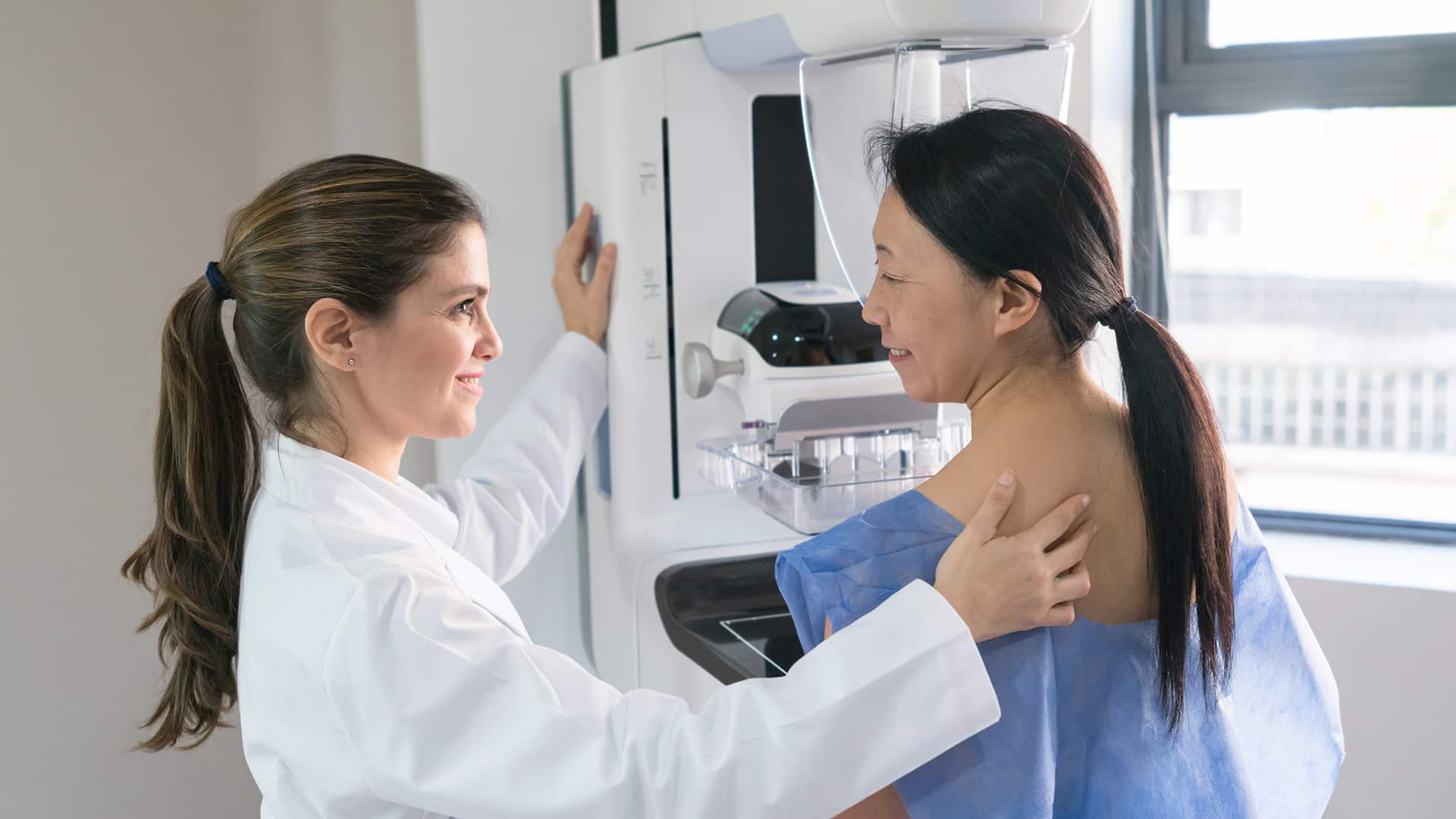
A mammogram is an imaging test that uses low-dose X-rays to create images of breast tissue; it is a screening tool to detect tissue changes and abnormalities. For a first appointment, many people want to know what the test involves, why it is done, and how to prepare. Here’s information on what to expect and how to prepare for your first mammogram:
What Is a Mammogram?
A mammogram is a breast imaging exam performed with a specialized X-ray machine to identify areas that appear different from the surrounding tissue. A screening mammogram is typically done when there are no current breast symptoms, while a diagnostic mammogram may be ordered when further imaging is needed. The appointment itself is often brief. The imaging portion often takes about 20 minutes, though timing can vary by facility.
During the mammogram exam, a technologist places one breast at a time on a flat plate. Another plate presses the breast from above to spread the tissue for a clearer image, and this compression lasts only a few seconds per image. You will be asked to stand still and follow simple instructions, such as when to hold your breath. Images are usually taken from at least two angles per breast.
What Is This Screening For?
This breast screening is used to check for tissue changes that may not be noticeable during daily activities or a physical exam. Its purpose is to identify findings that may need comparison, short-term follow-up, or more testing. Mammograms do not provide answers to all conditions, but they can provide useful information for ongoing care. At the appointment, you will likely check in, confirm basic health information, and change into a gown.
During
The technologist may ask whether you have breast symptoms, prior breast procedures, or a family history that is relevant to imaging records. These details help the imaging team document the exam accurately. Some people notice pressure during the breast compression, but the sensation usually ends quickly when the image is complete. If discomfort is a concern, tell the technologist, and they can explain each step as the exam continues.
After
After the images are taken, a radiologist reviews them and sends a report to the ordering provider. In some cases, you may be called back for extra images, but this is common. A callback does not, by itself, indicate a serious problem, because additional images are often taken to clarify areas that were not fully visible in the first set.
How Can You Prepare?
When scheduling, ask how long the appointment will take and whether prior images should be sent to the facility. If you have had breast imaging before, bringing the name and location of the prior center can help staff request earlier studies for comparison. Practical preparation can make your visit simpler and help you stay productive. Bring your insurance card, photo ID, and any forms the office requests.
On the day of your exam, wear a two-piece outfit so changing is easier. Avoid applying deodorant, powders, creams, or lotions to the chest or underarm area, as some products can affect the images. If your breasts are often more sensitive during your period, ask whether timing the appointment differently may help.
Arrive a little early, be ready to clearly describe any current symptoms you’ve been experiencing, and eat and drink as you normally would unless told otherwise. This visit is a time to ask questions and learn about potential follow-up visits. Some centers provide results quickly, while others send them after formal review. Keep a copy of the report if available and note when the next screening is recommended.
Visit a Women’s Health Provider
A mammogram appointment is usually a straightforward process that uses imaging to assess your breast health. Knowing what the test is, what happens during the visit, and how to prepare can help you stay proactive about your health. If you have questions about timing, results, or next steps, visit a women’s health provider for guidance. They can help you understand this screening exam and what to expect.
